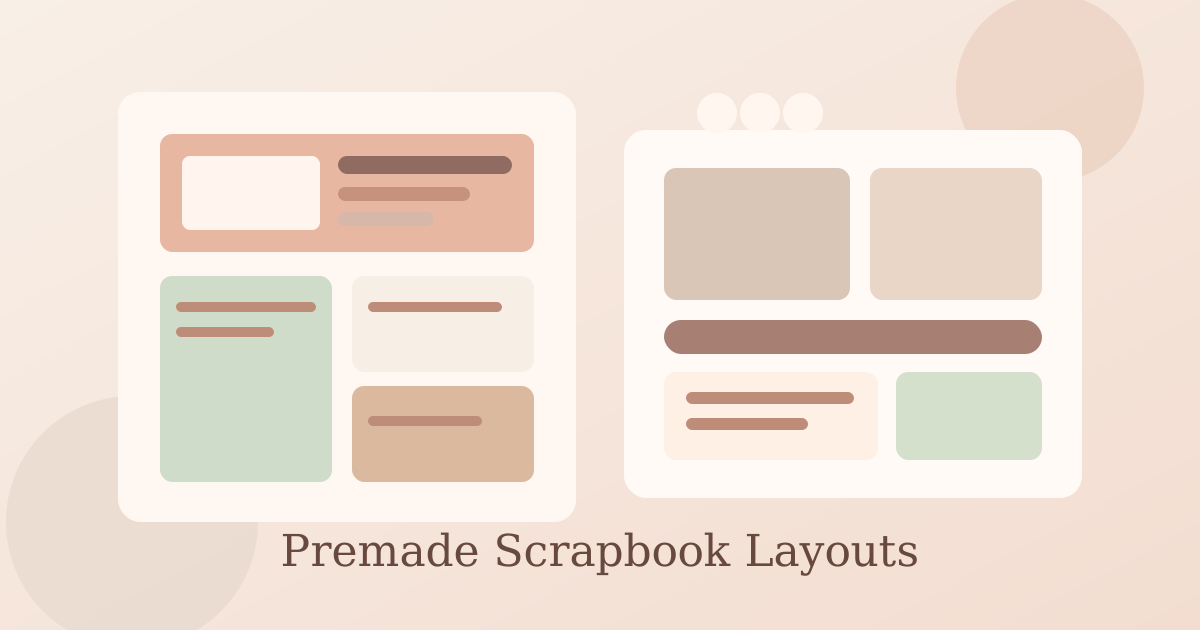
Premade scrapbook layouts can feel like a shortcut, and sometimes that idea makes people uneasy. If the page arrived half-designed, does it still count as your scrapbook? In practice, that question matters less than whether the page helps you finish the album you actually want to make.
For many scrapbookers, especially during busy seasons, the bigger risk is not that a page feels too easy. It is that a project stalls because every layout asks for too many decisions at once. A good premade layout reduces that friction without taking the story away from you.
Are premade scrapbook layouts worth using?
Yes, when you want help with structure rather than help with meaning. Premade scrapbook layouts work best when you already know the photos and story you want to include, but you do not want to build every title block, paper layer, and embellishment cluster from scratch.
The easiest way to judge them is simple: if a layout saves time while still leaving room for your own photos, journaling, title choices, and finishing details, it is doing its job.
What counts as a premade scrapbook layout?
A premade scrapbook layout is usually more finished than a page kit. With a kit, you receive coordinated supplies and still assemble the page yourself. With a premade layout, some of the design work has already happened. The background might already be layered, photo mats may be placed, and decorative clusters may already be attached or planned.
That difference matters because the shopping decision is different. You are not only choosing colours and theme. You are choosing how much creative control you want to keep.
When ready-made pages make the most sense
- When you are finishing an album quickly for a gift, graduation, anniversary, or end-of-year project.
- When you have the photos ready but feel stuck at the blank-page stage.
- When you want consistent pages across one event, such as a wedding, holiday, or baby album.
- When a scrapbook needs to be workable rather than highly experimental.
This works especially well for readers who like the calm structure of repeatable templates but want even less setup. A premade page is closer to execution than planning.
How to tell the difference between premade layouts and page kits
The easiest clue is whether the product photograph shows completed pages or loose supplies. If you are looking at stacks of paper, stickers, and die cuts, you are probably buying a kit. If you are looking at assembled or nearly assembled pages with fixed decoration zones, you are much closer to a premade layout.
That is why this topic should stay separate from the site's guide to scrapbook page kits. Kits help you coordinate materials. Premade layouts help you skip part of the construction process.
What to look for before you buy
Photo openings that match your real pictures
A beautiful ready-made page is not useful if every photo mat is the wrong orientation. Count how many landscape and portrait photos you need before choosing the layout. If most of your images are vertical, avoid a premade page built around wide horizontal openings.
Enough space for journaling
Some premade layouts look polished because they are heavily decorated, but that can leave almost no room for writing. If you like your albums to hold context, names, dates, or short reflections, choose designs with a dedicated journaling block or card pocket.
A theme that supports the story, not just the season
It is easy to be swayed by cute paper. Try to ask a calmer question: does this page support the tone of my photos? A cheerful birthday page and a heritage page can both use florals, but they do not need the same mood. If you are unsure, a simpler layout with calmer paper is usually the safer choice.
How to make a premade page feel personal
Change the title treatment
The title is often the fastest way to shift a premade page away from generic wording. Swap a printed phrase for your own album heading, or use ideas from the scrapbook title ideas guide to give the page a more specific voice.
Add one meaningful keepsake
A luggage tag, a trimmed invitation, a handwritten note, or a tiny map fragment immediately grounds the layout in your life. You do not need many additions. One strong detail often does more than several extra embellishments.
Write something the design could never supply
The page may have come with polished paper layers, but it did not come with your version of the story. A brief note about what happened before the photo, what someone said, or why the day mattered is what makes the layout yours.
Common mistakes with premade scrapbook layouts
- Over-embellishing the page because you feel you need to prove you customised it.
- Forcing the wrong photos into the provided openings instead of choosing a layout that fits the photos.
- Leaving all printed sentiments in place even when they do not match the story.
- Using heavily finished premade pages for very bulky keepsakes that need more flexible construction.
If you are new to page design, it helps to remember that restraint is part of good scrapbooking. A premade layout does not need to be disguised. It only needs to be finished thoughtfully.
When not to use ready-made pages
If the story depends on unusual photo sizes, long journaling, or highly interactive elements, a premade page can become limiting. The same is true when you are building a very personal album style from the ground up. In those cases, start with your own layout plan or work from a looser template instead.
Quick answers about premade scrapbook layouts
Are premade scrapbook layouts good for beginners? Yes. They reduce blank-page hesitation and help you focus on photos, titles, and story details.
Do premade scrapbook layouts look generic? They can, if you leave every default phrase and never add your own context. Small personal edits usually fix that quickly.
Are premade pages better than kits? Not better, just different. Kits suit people who still want to assemble the page. Premade layouts suit people who want more of the structure finished already.